


Tax season is stressful enough without scammers trying to take advantage of taxpayers. Unfortunately, tax-related scams continue to evolve, and in 2026, fraudsters are becoming more convincing, more urgent, and harder to detect.

The Internal Revenue Service (IRS) continues to warn taxpayers about rising identity theft, refund fraud, and impersonation schemes. Whether you're filing taxes for the first time or you’ve been doing it for years, staying informed is one of the best ways to protect your refund, your identity, and your peace of mind.
Below is a breakdown of the most common tax scams in 2026, how to spot them, and what you can do to stay safe.
what are the most common tax scams?
Scammers use a variety of tactics to steal personal and financial information. Some of the most common tax-related scams include:
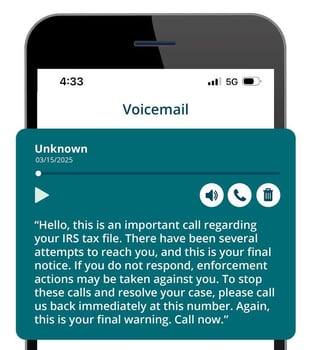
IRS Impersonation Scams
AI-Powered Phishing and Deepfake Scams
Fake Tax Preparer or “Ghost Preparer” Scams
Fake Tax Software or Account Setup Scams
Social Media “Tax Hacks” or Fake Credits
Identity Theft Tax Refund Scams
how can i tell if a tax call, text, or email is fake?
Scammers rely on urgency and fear to get you to act fast. Here's what to look out for:
- The message demands immediate payment or threatens legal action, arrest, or license suspension.
- You're asked to pay using gift cards, wire transfers, or cryptocurrency.
- There are typos, strange email addresses, or poor grammar in the message.
- The IRS is contacting you out of the blue by phone, text, or email - they won’t. They always reach out by mail first.
QUICK TIP: When in doubt reach out! Contact the IRS directly at IRS.gov or call to verify any tax-related request. |
how can i avoid tax preparer scams?
While most tax professionals are trustworthy, some unethical preparers may steal refunds, overcharge for services, or file fraudulent returns. To protect yourself:
- Choose a reputable tax preparer: Look for professionals with a Preparer Tax Identification Number (PTIN) and check reviews before hiring.
- Never sign a blank tax return: A preparer should never ask you to sign a return without reviewing it first. Always review your return before signing and ask questions if anything seems off.
- Be cautious of “too good to be true” refund promises: Scammers may promise big refunds by falsifying info, which can get you in trouble with the IRS later.
- Make sure your refund is deposited into your own account: Some fraudulent preparers have refunds sent to their own accounts instead.
what should i do if someone files a tax return in my name?
If you try to file your taxes and receive a notice that a return has already been filed, you may be a victim of tax identity theft.
Here’s what to do:
- File Form 14039 (Identity Theft Affidavit) at IRS.gov.
- Check your credit reports at AnnualCreditReport.com for suspicious activity.
- Place a fraud alert with one of the three credit bureaus (Experian, Equifax, or TransUnion).
- Report the identity theft at IdentityTheft.gov.

what should i do if i get scammed?
If you’ve fallen victim to a tax scam, take action immediately to minimize damage:
- If you gave personal information: Contact the IRS, freeze your credit, and monitor your financial accounts.
- If you paid a scammer: Report it to the FTC at ReportFraud.ftc.gov and file a police report.
- If your tax refund was stolen: File an Identity Theft Affidavit (Form 14039) with the IRS and follow their instructions to recover your refund.
how to protect myself in 2026?
-
File early
- Use multi-factor authentication
- Verify tax preparers
- Only use official IRS website
- Never click tax links in unsolicited messages
what’s next?
The best way to protect yourself this tax season is to stay informed, cautious, and skeptical of anything that feels off. If you get a suspicious message or call, don’t engage—just verify it directly through IRS.gov.
Want to stay one step ahead of scammers all year long?
Check out our Common Scams to Avoid article to learn more ways to protect your personal and financial information.