

Credit card debt just sucks - plain as that!
 Maybe an unexpected expense landed on your card. Maybe everyday purchases started adding up. Whatever brought you here, watching your balance grow while trying to keep up with payments can feel frustrating.
When you carry a balance, interest can make that debt harder to pay off. Missed payments can also lead to fees and affect your credit.
You’re certainly not alone. According to the Federal Reserve Bank of New York, U.S. credit card balances reached $1.26 trillion in the second quarter of 2026. YIKES! That’s a big number, but your next step can be small. Here are practical ways to understand what you owe, choose a payoff strategy and find support when you need it.
|
short on time? jump ahead to a section
|
 how do i get rid of credit card debt on my own?
My father would always say “Debt ain’t no joke” each time he paid his bills. To get rid of credit card debt, it'll certainly help to have an action plan in place so there's a clear direction of what you have set out to do when eliminating debt. Here’s where you can start.
 step 1. freeze your card
The first step is to avoid adding to your balance when possible. It’s harder to make progress when new purchases keep replacing the debt you’ve paid off.
Give your card a break by:
- Leaving it at home when you shop.
- Removing it from shopping apps and digital wallets.
- Using your card issuer’s lock feature, if available.
- Reviewing subscriptions and other recurring charges billed to the card.
Check what a card lock actually blocks. Depending on your issuer, recurring charges may still go through. Locking your card also doesn’t stop interest or remove your responsibility to make payments.
If you’re relying on credit for necessities like groceries or gas, focus on what you can realistically change. Review your budget and contact your lender if your payments are becoming difficult to manage.
This step is about making room for progress, not making yourself feel bad about how you got here.
 step 2. get to know your debts
It’s easy to say, “In six months, I’ll have all my credit cards paid off.” But without knowing your balances and budget, that goal is more of a wish than a plan.
ADD UP YOUR DEBTS

Whether you owe $1,000, $10,000 or more, knowing your total gives you a starting point.
For each credit card, write down:
- Your current balance.
- Your annual percentage rate, or APR.
- Your minimum monthly payment.
- Your payment due date.
- Any promotional rate and when it ends.
Check your latest statements rather than relying on memory. Different balances on the same card, such as purchases and cash advances, may have different interest rates, so note those when they apply.
Having this information in one place makes it easier to choose which balance to tackle first.
DETERMINE YOUR MONTHLY EXPENSES
Now list your take-home income and monthly expenses, not just your credit card payments.
Include housing, utilities, groceries, transportation, insurance, childcare and subscriptions. You can also budget for things you enjoy, such as dining out, as long as the amount fits your plan.
Make room for expenses that don’t happen every month, too. Car maintenance, annual renewals and gifts can sneak up on you when they aren’t part of the budget.
Your financial needs will change, so review your plan regularly rather than treating it as something you create once and forget.
FIND THE WIGGLE ROOM
After covering your essentials and minimum debt payments, see what you can realistically put toward your target balance.
Could you pause a subscription? Spend a little less on takeout? Put occasional extra income toward debt?
Even a small extra payment can help. Choose an amount you can maintain without leaving yourself short on necessities.
If there’s nothing left or you can’t cover your minimum payments, reach out to your lender instead of forcing a plan that doesn’t fit.
 step 3. choose a paydown strategy that works for you
Two common approaches are the snowball method and the avalanche method. Both give your extra payments a clear destination.
As we discuss in 7 Steps to Paying Down Debt, people may swear by one method over the other. What matters is choosing an approach you can realistically follow.
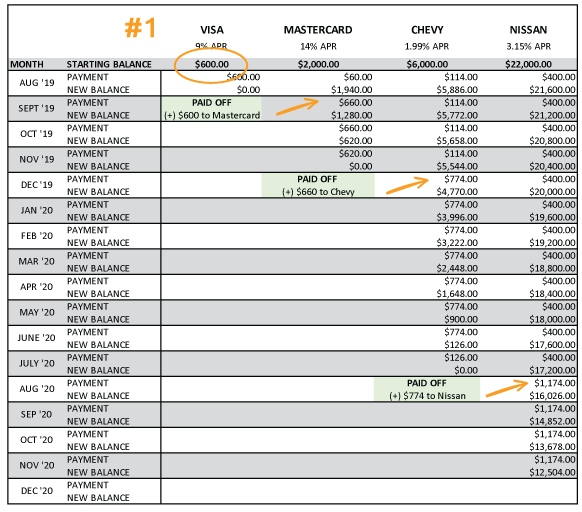
Snowball
This is where you make the minimum monthly payment on all debts and contribute as much extra income as you can to the smallest debt first. Once you pay off the smallest debt, you take the total you were contributing and put it towards the next smallest.
Avalanche
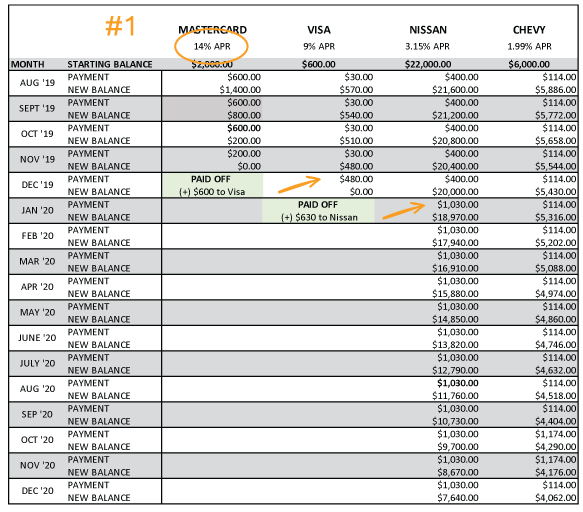
The avalanche method is where you put the extra payments towards the debt with the highest interest rate. Once you pay off the highest, you move to the next highest, and so on. Paying more towards debt speeds up the debt pay-down process. This can save you some time and money during your journey.
QUICK TIP: A balance transfer may help reduce interest while you pay down debt, but it doesn’t erase what you owe. Compare the transfer fee, promotional APR, offer length and rate after the promotion ends. Check out When Should I Do a Balance Transfer? to explore whether it fits your situation. |
 step 4. make your plan and make it visible
Once you choose your paydown strategy, write it down. Include the balance you’re tackling first, how much you’ll pay each month and a realistic payoff goal.
Need somewhere to track it? This free Debt Paydown Plan gives you space to track up to four debts by entering your starting balance, payment and new balance. Update the sheet as you make payments so you can see your progress and keep your next target in sight.
Keep your plan somewhere you’ll regularly check like on your fridge, at your desk or saved on your computer. Watching those balances shrink can be a helpful reminder that your efforts are adding up!
Need help finding room in your budget for those payments? Our Smart Budgeting Kit includes a step-by-step budgeting guide, an interactive spending planner and a walkthrough video. Use it alongside your Debt Paydown Plan to organize your spending and figure out what you can realistically put toward debt each month.

QUICK TIP: Want to see how an extra payment could change your payoff timeline? Use Skyla’s Credit Card Payoff Calculator to compare payment amounts. The estimate assumes you don’t add new charges to your card. |
 step 5. adjust and adapt
 If you want this paydown plan to truly work in your favor, you need to make some changes to how you move and spend money on a regular basis. This means you need to take a break from using credit cards and convert to using cash. You can also look into cutting the expenses you don’t really need or find ways to earn some extra money on the side.
Cut down on your expenses
Since you listed out all of your monthly expenses in step 2, what can you do without?
- Are you a member of a gym? Consider free health and fitness apps like Nike Training Club
- Do you have a lot of streaming services, subscription boxes, cable TV, music services, or car insurance? Do you need them? Is there a way you can enjoy the same service but at a $0 to low cost?
- Do you buy coffee on the way to work or out running errands? Consider making coffee at home and save that extra $5 each trip – it can add up!
QUICK TIP: If you work from home or you don't drive your vehicle as much, you could trim down your car insurance cost since you're using less mileage during the year. Contact your car insurance provider and ask about how you can trim your payment down. |
Need some more ideas for how to cut down on spending? Here are 37 frugal living tips to help you save money by the Clever Girl Finance
take a break from credit cards and spend what you have
Using cash or a debit card can help you avoid adding to your credit card balance.
Pick the method that helps you track spending, and keep an eye on your checking account balance to avoid overdrawing it.
You don’t automatically need to close your credit card to stop using it. Closing a card can reduce your available credit and increase your credit utilization—the percentage of available credit you’re using—which may lower your score.
Still, keeping a card open isn’t always the best choice if it has costly fees or makes overspending difficult to control. Consider both your credit and your ability to manage the account.
QUICK TIP: Make a shopping list and check for discounts before you buy. A sale only saves you money if it’s something you needed and planned to purchase. |
get a side hustle to help pay down credit card debt
There are plenty of opportunities out there to help you make more money. You can sell your stuff, get paid to do chores for others, rent your room or entire home on sites like Airbnb, become a dog walker, and more! Check out these 53 Profitable Ideas to Make Extra Money on the Side.
 what are some other options to help?
Having a lot of credit card debt can feel extremely overwhelming, but you don’t need to go it alone. If you don’t feel like you can pay off your debt through your own budgeting skills, you have other options available.
Work with your lender
You were approved with a credit card in the first place because the lender saw you as less of a risk. They trust you'll repay them their money. If you were having trouble making payments the best thing to do is be open and honest with them. There may be a program they offer that can help you. Many lenders offer Skip-a-pay where the lender will offer more time to come up with a payment on your credit card. If you're struggling to make your next credit card payment, contact your financial institution - there may be a hardship program available.
QUICK TIP: If you're curious about Skyla's Skip-A-Pay program, it's offered on auto loans and personal loans. You can learn more about it here. |
CONSIDER Doing a balance transfer
If you have one or more than one credit card, lenders offer credit cards where the debt from previous credit cards is consolidated and transferred onto a credit card (preferably a 0% APR credit card) where you can pay off your debt and not pay the interest for a certain period of time. Many lenders offer this debt paydown solution, but it may to may not be best for every credit card holder.

QUICK TIP: Not all financial institutions charge a boat load of fees when doing a balance transfer. At Skyla, a great benefit to our balance transfer is that it's totally free! Check it out! |
CONSIDER another personal loan
Normally I would be against using another loan to pay off your credit card debt, but what if you don't have immediate cash on hand and you're looking for some peace of mind? Plus, if your credit card interest rate is super high, getting a personal loan with a lower interest rate can save you money in the long run. Using a personal loan to pay off credit card debt could mean you'll pay the original debt off in full. This is my least favorite solution.
It's important to know when it makes sense to use a personal loan to pay off credit card debt. Will you get a lower interest rate? Will you adjust your spending habits? Can you make regular payments on a personal loan? Think about this before considering another personal loan.
you've got the steps...here's what's next
Feel free to come back and use this article as a reminder to stick to your credit card debt pay-down plan. I also hope you feel more confident in kicking debt in the hams and enjoy your life stress-free. Remember, you’re not the only one who has credit card debt, and becoming debt-free doesn't happen overnight (unless you came into a large load of money like winning the lottery). It's important to stick with your paydown process and stay motivated along the way.
Want some tools that'll make your process easier? Here you go!
APPS AND BANKING SERVICES THAT'LL HELP ALONG THE WAY
- Skyla’s Credit Card Payoff Calculator: Compare payment amounts and estimated payoff timelines.
- Skyla’s Smart Budgeting Kit: Organize income, expenses and your debt payment plan.
- Rocket Money: Offers spending and subscription tracking. Some services, including subscription cancellation assistance, require a paid membership. Review current features and pricing. help.rocketmoney.com
- Debt Payoff Planner: Helps organize debts and map out repayment. Check current features and pricing on the provider’s website. www.debtpayoffplanner.com
- Debt Manager: An Apple app for organizing debts and tracking repayment progress. Review its current App Store listing before purchasing. apps.apple.com
You don’t need a paid app to get started. A spreadsheet, printable planner or notebook can work, too.
 you deserve a freebie
If you made it through all that information, you deserve a high five and some tools to help you take action!
Skyla’s Smart Budgeting Kit includes resources to help you:
- Create a monthly budget with income and expenses.
- Design a debt payment plan.
- Organize your financial goals.
Start with one task today: list your balances, check your interest rates or choose an amount to put toward your target debt.

NEED FURTHER ASSISTANCE WITH YOUR CREDIT CARD DEBT? WE'RE HAPPY TO ASSIST
If you have any questions or comments, our Customer Service Representatives are here for you. You can send an email, give us a call at 704.375.0183, or visit any of our branches.

 Plan to Get Out of Credit Card Debt
Debt is overwhelming - I know! Here's what to do to become credit card debt-free.
 Pay Off Debt in 7 Steps
Need solutions to pay down your debt and you don’t know where to start? Your answers are here.
 Build Credit Without a Credit Card
Building your credit doesn't have to be with a credit card. Here's how you can do it.